
Spiders
Most spiders are harmless, but black widows and, in parts of the region, brown recluses are worth knowing about.
Why spiders show up
Spiders go where the food is. If your home has crickets, flies, ants or moths, spiders will follow, and they like quiet, undisturbed places such as garages, basements, sheds, crawl spaces and the corners of eaves. Outdoor lighting makes it worse, since lights draw the insects that spiders eat.
Seasonal changes play a part. In late summer and fall, mature spiders wander in search of mates and shelter, and cooler weather sends more of them toward walls and boxes. Cluttered storage and stacked cardboard give them plenty of hiding places.
Common species in Alabama and Georgia
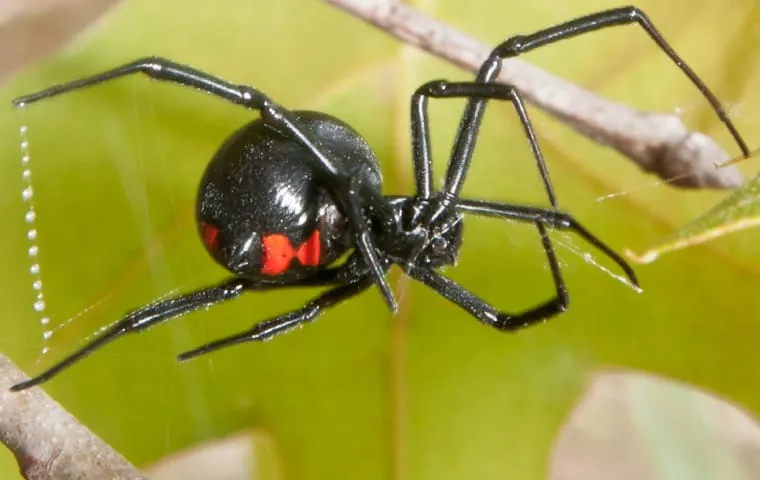
Most spiders you will find are harmless to people and help control other insects. A few deserve respect. The black widow is shiny black with a red hourglass on the underside and builds messy webs in woodpiles, meter boxes and garages. The brown widow, which is tan to gray with an orange hourglass and spiky egg sacs, is common in both states and often builds around porches, mailboxes and playsets. The brown recluse has a darker violin-shaped mark and hides in boxes, closets and shoes. It is found in parts of the region, more often in north Alabama and north Georgia, and is frequently misidentified, since many harmless brown spiders look similar. Bites from any of these call for medical attention.
Harmless residents are far more common: wolf spiders, orb weavers, cellar spiders, jumping spiders, southern house spiders and funnel weavers.
How we treat spiders
Which spider it is decides what we do, so we start by identifying what you have and where it lives. Widows and recluses favor undisturbed clutter, while orb weavers and house spiders build in eaves and around lights.
We treat the corners, eaves and entry points where spiders settle, mostly on the outside of the structure, and knock down webs and egg sacs we can reach. Fewer insects means fewer spiders, so we also cut back what they feed on. A follow-up visit checks activity and lets us adjust.
Prevention tips
- Reduce clutter in garages, closets and storage areas, and use sealed plastic bins instead of cardboard.
- Shake out shoes, gloves and clothing that have been sitting in storage.
- Wear gloves when moving firewood, lumber or yard debris.
- Seal gaps around windows, doors and utility lines.
- Switch to yellow or warm-toned outdoor bulbs, which draw fewer insects.
- Knock down webs regularly and vacuum corners.
- Keep shrubs and woodpiles away from the house.
Spiders FAQ
Which spiders should I worry about?
Black widow and brown recluse bites can be medically significant, though the recluse is found only in parts of the region and is often misidentified. Brown widows can also bite, usually less severely than black widows. All three hide in sheds, woodpiles, storage boxes and outdoor furniture. If you think you have been bitten, contact a doctor.
How do you keep spiders away?
We treat the places spiders hide and clear webs from around the outside of the home. Reducing the other insects spiders feed on also makes your home much less attractive to them.
Other pests
Ready for a pest-free home?
Schedule today and get $50 OFF your first service.